
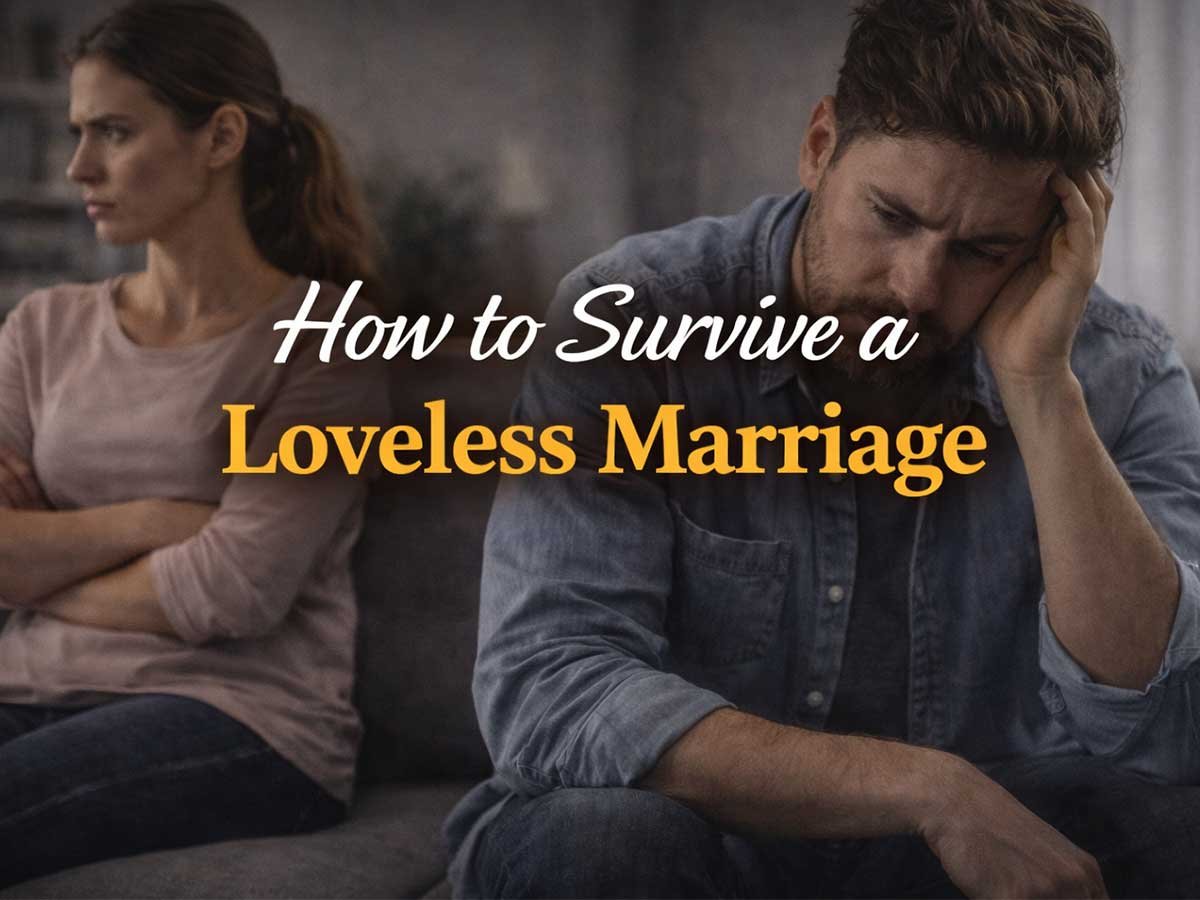
A loveless marriage does not always look broken from the outside, but inside it can feel like living in emotional winter with no promise of spring. The quiet distance, the absence of affection, and the routine of shared tasks without shared hearts can slowly erode self-worth and hope. Many people stay for understandable reasons—children, finances, culture, or faith—yet feel deeply alone in their own home.
Surviving this kind of relationship is not about learning to accept emotional starvation as normal. It is about protecting your mind, body, and spirit while you decide what you want your future to look like.
You can begin to reclaim your voice, rebuild your sense of self, and create pockets of safety and meaning even if your partner does not change. The journey is not easy, but it is possible to survive a loveless marriage without disappearing inside it. You are allowed to put your own wellbeing back on the table as something that matters.
Understanding a Loveless Marriage
A loveless marriage is less about constant fighting and more about a painful absence: of warmth, curiosity, tenderness, and real partnership. Days can be filled with logistics—who pays which bill, who picks up the children, what to cook—while deeper emotional connection quietly dies.
You may feel like roommates or business partners rather than lovers or close friends, sharing a life but not a heart. This emptiness often brings confusion, because on the surface nothing seems “bad enough” to justify how deeply you hurt.
Over time, the lack of affection and validation can lead to self-blame, as though your needs are unreasonable or you are somehow “too much.” Naming the reality—that the love you need is missing—is the first act of honesty with yourself. It creates the foundation for every boundary, decision, and act of self-care that follows.
The Hidden Cost to Your Identity
Living for years without emotional reciprocity reshapes how you see yourself, often in subtle and painful ways. You might begin to shrink your opinions, silence your needs, or avoid conflict just to keep the fragile peace at home.
The more you are dismissed, ignored, or met with indifference, the easier it becomes to believe you are unlovable or fundamentally flawed. This inner story can spill into other areas of life, making you less confident at work, with friends, or in your own dreams and goals.
You may notice that you no longer recognize the person you once were—more hopeful, expressive, playful, or ambitious. The truth is that your core self has not disappeared; it has gone quiet to survive an unsafe emotional climate. Part of surviving a loveless marriage is slowly inviting that self back into the light, with gentleness rather than judgment.
Healthy Detachment: Caring Without Losing Yours
Healthy detachment is the art of accepting what you cannot force while staying loyal to your own wellbeing. It does not mean you stop caring or become cold; it means you stop sacrificing your mental and emotional health to chase love that is not being freely offered.

Instead of obsessing over every mood shift, every cold shoulder, or every unspoken word, you begin to release the belief that you alone can rescue the relationship. This shift allows you to breathe, think more clearly, and respond rather than react in desperation or rage.
Healthy detachment might look like choosing not to argue when your partner is stonewalling, and instead going for a walk, journaling, or calling a supportive friend. It is a quiet but powerful declaration that you will no longer abandon yourself in the process of trying to be chosen. Over time, this stance gives you strength to evaluate the marriage from a place of clarity instead of panic.
Rebuilding Your Inner World
When the marriage feels empty, it becomes essential to build a rich inner and outer life that does not depend on your spouse. Start by reconnecting with parts of yourself that existed before the relationship: interests, talents, spiritual practices, or causes you care about.
This could mean joining a class, returning to a forgotten hobby, engaging in faith or community events, or simply reading and learning in areas that fascinate you. As you invest in these areas, your identity becomes less tied to how wanted or appreciated you feel at home.
You begin to remember that you are a whole person with depth, creativity, and purpose beyond this one role. Alongside this, emotional self-care—therapy, journaling, movement, and rest—helps you process grief rather than drown in it. Rebuilding your inner world is not running away from reality; it is building a safe place inside it.
Boundaries and Communication That Protect You
In a loveless marriage, boundaries are not about controlling your partner—they are about defining how you agree to be treated and how you choose to respond. This can start with identifying what crosses the line for you, such as insults, yelling, contempt, or using silence to punish.
Once you are clear internally, you can communicate more calmly and directly, saying things like, “I will step away from conversations where I am insulted; we can continue when we are calm.” This kind of communication may or may not change your partner’s behavior, but it clarifies your own.
Alongside boundaries, aim for focused, low-drama conversations about patterns rather than attacks on character: “I feel alone when we never talk about anything beyond chores, and I would like us to try changing that.” Even if your spouse remains distant or defensive, you will know you have honored your voice instead of silencing it to keep the peace. Protecting your dignity in this way is a core part of not losing yourself.
Creating “Islands” of Safety When You Can’t Leave
Sometimes leaving is not realistic in the short term because of finances, children, health, or cultural and religious pressures. In those situations, one survival strategy is to create “islands” of safety, comfort, and meaning within the same home.
These islands might be a physical space—a chair by a window, a small desk, a prayer mat, a garden—or protected times in your day dedicated to your own nourishment. During these moments, you intentionally step out of the emotional climate of the marriage and into practices that soothe and strengthen you. Grounding techniques such as slow breathing, noticing your senses, and gentle stretching can help when tensions rise.
Connecting discreetly with supportive people—friends, mentors, professionals—gives you a reality check and emotional backup. Remember that staying for now does not mean you are destined to feel this way forever; these islands help you endure the present while you gain clarity about the future.
Honoring Your Choices and Your Future
Surviving a loveless marriage ultimately brings you to a series of deeply personal decisions that only you can make. Some choose to stay and actively work on the relationship if both partners are willing to confront hard truths and seek help.
Others decide to remain but shift focus toward personal growth and emotional detachment, accepting that their spouse may never be the partner they hoped for. Still others quietly plan an eventual exit, gathering information, support, and resources so that any change is thoughtful rather than impulsive.
None of these paths make you selfish, weak, or a failure; each reflects your unique circumstances, values, and responsibilities. What matters most is that you are no longer erasing yourself to keep the marriage looking intact from the outside. Honoring your choices means acknowledging your pain, your needs, and your right to a life that feels honest and alive, whatever form that ultimately takes.
Conclusion
Surviving a loveless marriage means reclaiming your worth through boundaries, self-care, and healthy detachment. Small steps like nurturing hobbies, seeking support, and honoring your needs rebuild your identity beyond the relationship. Whether staying or planning change, prioritize your heart—you deserve a life where you don’t disappear.