
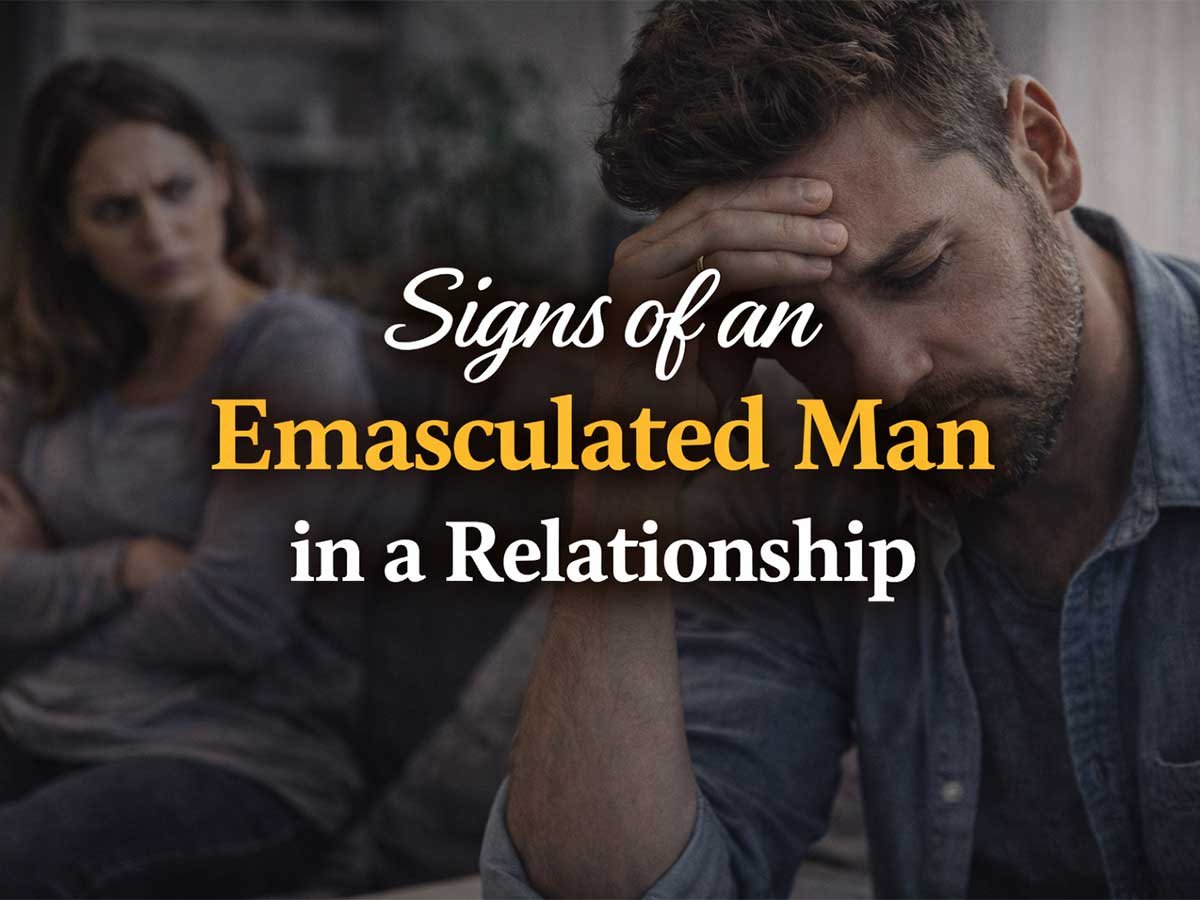
Emasculation in relationships rarely starts loudly. It builds quietly through small moments—being dismissed, corrected, or overlooked—until confidence erodes. This doesn’t excuse hurtful behavior or emotional withdrawal, but it helps explain it.
Many men don’t lose strength overnight; they lose a sense of agency, respect, and voice over time. Understanding this dynamic is the first step toward healthier balance and repair.
What It Means When a Man Feels Emasculated
An emasculated man in a relationship feels stripped of influence, respect, or autonomy. He may seem passive, withdrawn, defensive, or overly reactive—not because he lacks care, but because repeated dismissal or control has weakened his sense of self and emotional safety within the relationship.
He Withdraws in Social Settings
In group conversations, he goes quiet. He lets others speak for him, avoids sharing opinions, or stays on the edge of the room. When decisions are discussed, he defers quickly or looks to his partner before answering. Even around friends, his energy feels muted, like he’s unsure where he fits. The shift is noticeable, and it signals a loss of confidence rather than simple introversion.
This often develops when a man feels consistently corrected, interrupted, or overridden—especially in public. Over time, speaking up feels risky. Silence becomes protection. He learns that expressing himself may lead to embarrassment or conflict, so he reduces himself to keep the peace.
Inside, he feels small and invisible. There’s frustration he doesn’t voice and a quiet grief for the version of himself who once felt sure and respected.
He Avoids Making Decisions
He asks for permission over minor choices—what to eat, where to go, how to spend time. When asked for input, he shrugs or says, “Whatever you want.” Decision-making feels heavy, not empowering. Even when the outcome doesn’t matter much, he hesitates, signaling uncertainty rather than flexibility.
This pattern grows when his choices have been repeatedly criticized or undone. When decisions are met with disapproval, control, or correction, initiative feels pointless. Eventually, it’s easier to step back than to risk being wrong again.
Internally, he feels unsure and disconnected from his own judgment. There’s a dull sense of incompetence that wasn’t always there.
He Becomes Overly Defensive or Passive-Aggressive
Small comments spark big reactions—or none at all, followed by subtle resentment. He may joke sarcastically, withdraw affection, or shut down conversations. The behavior seems out of proportion, hinting at deeper tension beneath the surface.
This often comes from feeling dismissed or invalidated over time. When direct expression doesn’t feel safe or effective, emotions find sideways exits. Defensiveness becomes armor; passive aggression becomes a voice when directness feels punished.
Inside, he feels misunderstood and cornered. Anger turns inward, mixing with shame and confusion about how to be heard without causing conflict.
He Stops Pursuing Goals or Interests
Activities that once mattered fade away. He gives up hobbies, stops setting goals, or loses motivation to improve areas of his life. When asked, he says he’s tired or uninterested, but the change feels deeper than burnout.
This can develop when effort isn’t acknowledged or when ambition is subtly discouraged. Without support or respect, striving feels lonely. Over time, disengagement feels safer than risking failure or criticism.
Internally, he feels dulled and disconnected from purpose. There’s a quiet sadness in letting go of parts of himself he once valued.
He Relies on You for Direction—but Resents It
He looks to his partner for guidance, reassurance, or approval, yet bristles when it comes. He follows along, then grows distant or irritable afterward. The dependence feels uncomfortable for both of you.

This happens when autonomy has been slowly replaced by control or dismissal. He adapts by leaning in for direction, even as it undermines his sense of self. The resentment comes from needing what also hurts his pride.
Inside, he feels conflicted and ashamed. He wants closeness and clarity, but not at the cost of his identity.
What Causes Emasculation in Relationships
Emasculation isn’t about weakness—it’s about imbalance. Common contributors include:
- Power imbalance: One partner consistently leads while the other follows without voice
- Constant criticism: Effort is noticed mainly when it falls short
- Loss of autonomy: Decisions are corrected, overridden, or controlled
- Emotional invalidation: Feelings are minimized or dismissed
Repair starts with restoring respect, shared agency, and emotional safety—on both sides. When a man feels heard and trusted again, confidence can return quietly, steadily, and without force.